Tuesday, May 7, 2019

Glycerol Definition

Glycerol is a colorless, odorless liquid with a sweet taste. It is viscous at room temperature and non-toxic in low concentrations. Glycerol was discovered in 1779. It is also called glycyl alcohol, glycerin or glycerine in some literature.

Glycerol is seen in biological systems as an intermediate in carbohydrate and lipid metabolism because surplus carbohydrate can be converted into long chain fatty acids and esterified with the three hydroxyl groups. Glycerol can influence immune reactions in the body through histamines, increased antibody production and by enhancing immune cell activity and is therefore classified as an allergen. In the blood, glycerol can increase blood pressure by preferentially attracting the water from tissues into plasma and lymph. In nephrons, glycerol can increase urine volume by preventing water resorption.

History of Glycerol


Glycerol was accidentally discovered by a Swedish scientist named K. W. Scheele. He was investigating the similarities between soap and a drying plaster called Emplastrum simplex. The salve was made of lead salts of fatty acids, while soap is made of sodium salts of organic acids. During his experiments of reacting olive oil with lead monoxide, he discovered a water-soluble substance with a sweet taste. This was the first recorded chemical isolation of glycerol and was initially called the ‘sweet principle of fat’. Scheele analyzed the substance and found it to be distinct from the other sugars known at the time. Glycerol did not crystallize, ferment, and showed greater heat resistance than most other sugars. He also investigated the difference between glycerol and cane sugar, especially in the proportion of oxygen (or phlogiston as it was then called) it contained. Scheele demonstrated that it took a greater amount of nitric acid to oxidize glycerol than cane sugar. It also did not release an alkali when it was reacted with ethanol. While it could not be easily crystallized, it could be distilled. It also decomposed at higher temperatures.

In 1836, the chemical formula of glycerol was elucidated by a French scientist called Pelouze. He proposed an empirical formula of C3H8O3. Fifty years later, the structural formula of C3H5(OH)3 was accepted, based on the work of two scientists named Berthelot and Lucea.

The relevance of glycerol as a commercially important chemical is linked to its use in the production of dynamite. Alfred Nobel, who later instituted the Nobel Prizes, discovered a method for the reliable stabilization, transport and handling of trinitroglycerin, which is the central explosive compound in dynamite. Glycerol, therefore, was involved in the rapid extraction of mineral ore, as well as many large-scale infrastructure projects that needed natural structures to be blasted away.

Properties of Glycerol


Pure glycerol has a melting point of 17.8°C. Its boiling point is 290°C but it also decomposes at that temperature. The presence of three hydroxyl groups makes the compound hygroscopic, with a tendency to absorb moisture from the air. This also makes it useful as a humectant in cosmetics and food, retaining water and preventing the substance from drying out.

Glycerol is easily soluble in water, due to the ability of the polyol groups to form hydrogen bonds with water molecules. Glycerol is slightly denser than water with a specific gravity of 1.26. This means that when glycerol is poured into a container of water, it will sink to the bottom. However, due to its solubility, over time and with mild agitation, glycerol will form an aqueous solution.

Glycerol can cause mild irritation to the eyes, nose, lungs and skin, particularly due to its hygroscopic nature. Skin and other internal organs can get dried out when pure glycerol comes into contact with these moist tissues. Since the molecule can bind to water, the same property that makes glycerol a good humectant also desiccates internal tissues. On the other hand, if a cosmetic preparation with high water content is applied on the skin, especially in arid environments, the presence of glycerol can prevent the lotion, cream or gel from drying out quickly.

The three hydroxyl groups of glycerol allow reactions with many organic acids to form esters. When all three reactive groups are esterified with long chain organic fatty acids, a triglyceride is formed. Triglycerides are among the most common lipids in the human body.

Uses of Glycerol


Glycerol is used in a number of industrial applications, in the pharmaceutical industry, in cosmetics and personal care products, in the production of resins, detergents, plastics and tobacco and as a humectant in food.

Its use as a commercially important chemical began with its application in the production of dynamite. Dynamite was necessary in the discovery and extraction of underground minerals, and in the construction of infrastructure. Therefore, it propelled industrial development.

Cosmetics and Food


Glycerol is used in the cosmetics industry as a moisture-control reagent and to enhance the texture of lotions and creams. Glycerol’s ability to retain moisture and its emollient properties make it an attractive ingredient in many moisturizing formulations. Glycerol can also prevent the cosmetic from either drying out or freezing.

In food, the utility of glycerol arises from its ability to form inter-molecular hydrogen bonds, especially with water molecules. This increases the water content in preserved food, without compromising on shelf life, and also enhances viscosity and texture. Its low toxicity and lack of a disagreeable odor or flavor allow the use of glycerol as an emulsifier.

Industrial Applications


Crude glycerin is a byproduct of the production of biofuels from soya bean oil and other vegetable oils. It contains over 60% impurities in the form of methanol, soaps and salts, making it difficult to extract pure glycerin. Recent advances in technology allow the use of crude glycerin to make urethane foams. Polyurethane foams have a variety of applications in the construction and automotive industries. They are also commonly used as insulators.

Pure glycerol is a crucial part of the industrial production of antifreeze, textiles and waxes. It is used in large quantities to generate resins, paints and waxes, for creating cleaning and purifying agents for soldering, and in the manufacture of many textiles and cosmetics.

Pharmaceuticals


Glycerol usage in the pharmaceutical industry is to improve smoothness and taste. It is used in the creation of tablets so that they are easy to swallow. The coating can disintegrate within the body. Cough lozenges often use glycerol to give a sweet taste. Suppositories of glycerol can act as laxatives since they can irritate anal mucosa.

Production of Triacetin


Triacetin is a triple ester of glycerol, formed through an esterifying reaction with acetic acid. It has a variety of uses in the food industry as a plasticizing agent, to enhance the viscosity of a product. It can also act as a stabilizer for food products that need to be preserved for extended periods of time.

Triacetin is used as an antiknock reagent in fuels for internal combustion engines. It is also an additive in cigarettes.

Glycerol Structure


Glycerol is a trihydroxy sugar alcohol with three carbon atoms and three hydroxyl groups. The presence of multiple hydroxyl groups and carbon atoms makes it an organic polyol compound with the IUPAC name of 1, 2, 3 – Propanetriol.

The structure of glycerol can be represented in a number of ways.
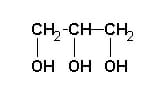
1,2,3-Propanetriol

The simplest is the image above, showing the basic backbone of three carbon atoms, each of them covalently bonded to a hydroxyl group. Alternately, the molecule can be represented as a Fischer projection, centered on the second carbon atom, as seen in the image below.
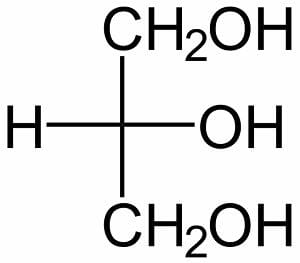
Glycerin Fischer

In addition, the molecule can be shown with a more accurate depiction of bond angles, without the explicit representation of the hydrogen atoms.
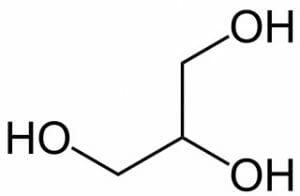
Glycerine Structural Formula V1

Monday, May 6, 2019

What Is the Difference Between Glycerin and Glycerol?

Glycerin and glycerol are two different products although they can be confused as being one and the same. Glycerol is the byproduct of the manufacture of biodiesel, which is made from animal fat or soybeans. In its raw state, glycerol can be converted into vegetable glycerin. If the glycerin is approved by the U.S. Pharmacopeia, it is typically used in beverages and food.

Glycerin is used extensively as a sweetener in chocolate filling, cookies and cakes. The colorless compound also serves as a humectant in soaps and lotions. Glycerin-based remedies treat such skin issues as rashes, acne, burns, psoriasis, bites and calluses. Glycerin soaps treat fungal and yeast infections and soften and ameliorate dry skin. Cough syrups and dietary supplements are also manufactured using glycerin. Adding the ingredient to weight-loss products prevents dehydration during exercise and enhances physical stamina. The ingredient is also added to toothpastes and mouthwashes to kill bacteria.

Used in supplements and weight loss products, glycerol improves performance and replenishes water during exercise. Healthcare providers use the ingredient in IV applications to reduce pressure within the brain and to treat such conditions as encephalitis, stroke, meningitis and central nervous system traumas. The liquid is also used to reduce corneal fluid buildup during an eye exam.

Sunday, May 5, 2019

Glycerol Recovery Rate

1.Glycerol Recovery Rate

The recovery rate of glycerol is calculated according to the following formula:

Glycerol recovery rate=Output of this month ÷ Input of theoretical glycerol in oil and fat of this month + The amount of glycerol left unfinished of last month - The amount of glycerol remaining unfinished of this month)

Theoretical glycerol input= Oil content(t) * (Saponification value - acid value)×0.0547

The amount of glycerol left unfinished last month(For example, the recovery of glycerol from sweet water hydrolyzed by oil)= Glycerol in Sweet Water [Sweet Water Quantity * Concentration (%)]+ Glycerol content(clear water quantity * concentration (%)) in 1#Clean water (Lime milk treated water) 十 Glycerol content in 2# clear water (sodium carbonate treated water) [secondary clear water quantity * concentration (%)] + Crude glycerol [volume * density * concentration (%)] + Glycerol content of various semi-finished products (glycerol in various containers in distillation condensation receivers, decolorization tanks and unfilled tanks)

The amount of glycerol in clear water [the amount of 1#clear water * concentration (%)] + the amount of glycerol in 2#clear water [the amount of 2#clear water * concentration (%)] + the amount of crude glycerol [the volume X density X concentration (%)] + the amount of semi-finished glycerol (the glycerol in different containers in distillation condensation receivers, decoloration tanks and unfilled storage tanks)


Saturday, May 4, 2019

Unit consumption of glycerol

Unit consumption of glycerol

The unit consumption of glycerol raw materials refers to the amount of chemical raw materials consumed per ton of glycerol. Due to the different calculation methods of each production unit, such as the concentration of physical products, some are calculated by 95% (industrial grade) and some by 98.5% (medicinal grade).The calculation benchmarks are different, some are based on the physical quantity of raw materials, some are based on the physical quantity of raw materials converted to 100%, so their unit consumption values are very different, and can not be compared among the various units in the industry. For this reason, the soap industry stipulates that FeCl3 is converted into 100% by physical content, HCl is 31%, NaOH is converted into 100% by physical content, and activated carbon is calculated by physical content.

Glycerol Conversion Formula
100% glycerol (t) ÷ 98.5% = medicinal glycerol (t)

100% glycerol (t) ÷ 95% = industrial glycerol (t)


Formula for Calculating Unit Consumption of FeCl3
FeCl3 Physical quantity (kg) × Actual content (%) ÷ Conversion of Medicinal (or Industrial) Glycerol = 100%FeCl3 unit consumption(kg/t)


Formula for calculating unit consumption of hydrochloric acid
31%Industrial hydrochloric acid(kg)÷Conversion of Medicinal (or Industrial) Glycerol = 31% Unit consumption of hydrochloric acid(kg/t)

Formula for calculating unit consumption of NaOH

NaOH physical quantity(kg)×Actual content(%)÷Conversion of Medicinal (or Industrial) Glycerol=100%NaOH unit consumption(kg/t)

Formula for Calculating Unit Consumption of Activated Carbon

Activated carbon physical quantity/Conversion of Medicinal (or Industrial) Glycerol = Unit Consumption of Activated Carbon(kg/t)

Friday, May 3, 2019

How to Dispose of Glycerin


Glycerin is a by-product of making bio-diesel fuel. This process produces significant quantities of glycerin that require disposal. There are many ways to do this, including making soap or compressing it into logs for heating. It can also be burned in purpose-built burners or sold to waste recycling companies. Another alternative is to use it to increase the rate of decomposition of compost. If you already have a compost heap and you need to dispose of glycerin, combine both needs to speed up decomposition, and you will always have a ready supply of topsoil to nourish your plants and vegetables


Step 1


Fill a wheelbarrow with straw. Lightly crush loose leaves and twigs with your hands, drop them into the wheelbarrow, and then mix all this dry material together with a garden fork or, if you prefer, just with your hands.


Step 2


Pour the glycerin into the wheelbarrow and mix with the garden fork until all the dry material is coated with glycerin. Empty the contents of the wheelbarrow onto the existing compost heap.


Step 3


Mix the glycerin-soaked material thoroughly through the existing compost by turning it several times with a pitchfork or shovel. It is important to lift the material up and turn it over to aerate it, as it is the interaction of oxygen with the other materials that causes them to decompose.


Step 4


Turn the compost over in the same manner every two weeks for 12 weeks, adding more plant and vegetable material to it each time. Remember to lift the material when you turn it to allow oxygen to penetration to the center of the heap.


Step 5


Repeat steps 1 to 4 to start another compost heap, leaving the first one to decompose over a 12- to 14-week period. Starting one heap before the preceding one is used on the garden will provide a ready supply of nutrient-rich soil.


Step 6


Shovel the completely decomposed compost onto existing garden beds, spreading it lightly around the plants, or dig it into fresh soil to create new garden beds.


Thursday, May 2, 2019

How to Make Lye Soap from Biodiesel By products

Steps
Edit
Image titled Make Lye Soap from Biodiesel By products Step 1
Place the glycerin in a stainless steel pot and heat it to 150 °F (66 °C) to remove any traces of methanol. Heat it to 175 °F (79 °C) if you made your biodiesel from ethanol.

Image titled Make Lye Soap from Biodiesel By products Step 2
Strain the glycerin to remove any impurities and then return it to the pot.

Image titled Make Lye Soap from Biodiesel By products Step 3
Measure 1 qt. of water for every gallon of glycerin and heat the water to 100 °F (38 °C). This works out to a 1-to-4 ratio of water to glycerin.

Image titled Make Lye Soap from Biodiesel By products Step 4
Stir approximately 5.5 oz. of lye (38.5 grams per liter) into the heated water until it is completely dissolved.

Image titled Make Lye Soap from Biodiesel By products Step 5
Add the water and lye mixture to the glycerin.

Image titled Make Lye Soap from Biodiesel By products Step 6
Continue to heat for another 10 minutes, stirring occasionally.

Image titled Make Lye Soap from Biodiesel By products Step 7
Remove the mixture from the heat and stir for another 10 minutes. You may see it start to foam.

Image titled Make Lye Soap from Biodiesel By products Step 8
Pour the mixture into a shallow container. A plastic storage bin with a lid works well. The size and number of containers needed depends on the amount of glycerin you are using and the desired thickness of the soap. For 1 ½ gallons of glycerin, use a 28-qt. container to make 1 ½-inch-thick soap.

Image titled Make Lye Soap from Biodiesel By products Step 9
Cover the liquid with a piece of plywood or cardboard to help hold the heat in so the soap cures properly. Let it cool and solidify for 24 hours.

Image titled Make Lye Soap from Biodiesel By products Step 10
Run a knife around the edge of the soap to loosen it and then flip the container over to remove the soap.

Image titled Make Lye Soap from Biodiesel By products Step 11
Cut the soap into 45 bars that measure 3-by-2 inches (5.1 cm).

Image titled Make Lye Soap from Biodiesel By products Step 12
Wait at least 4 more days before using the soap. During this additional drying time, the soap will turn from a dark brown to a lighter tan color.

Image titled Make Lye Soap from Biodiesel By products Step 13
Store the soap in zipper plastic bags with wax paper between the bars so they don’t stick together.

Wednesday, May 1, 2019

Frequently Asked Questions (FAQs) About Glycerin


Q: Where can you buy glycerin?


A: Animal and vegetable glycerin are widely available in groceries and drugstores.When buying it, remember to look for a USP-grade non-GMO product.


Q: What is glycerin made of?


A: Organic glycerin is made from animal and/or vegetable fats.It’s usually mixed with other ingredients, like water and essential oils, to improve its moisturizing effects.


Q: What does glycerin do?


A: Glycerin is used for a wide variety of applications in different industries. In the health and beauty sector, it’s often an ingredient in cosmetics and skincare products, as it helps attract and retain moisture in the skin. It also has therapeutic effects and may be used to help alleviate skin irritation, dehydration, constipation, and excessive pressure in the brain or eyes.

Glycerin is a popular ingredient in pharmaceutical formulations as well, since it can be used as a solvent. Plus, it helps keep ointments and creams from drying out.


Q: What are the uses of glycerin in food?


A: In the food industry, glycerin is used as a sweetener, humectant, solvent and preservative.


Q: Is glycerin vegan?


A: Not all glycerin is vegan. As mentioned above, this compound may be derived from either animal or vegetable fats. If you’re looking for a vegan glycerin, look for products that are specifically labeled “vegetable glycerin.


Q: Is glycerin bad for you?


A: Animal- and vegetable-derived glycerin is generally safe and beneficial when used properly. Keep in mind, though, that it may still cause a few side effects. For instance, applying topical glycerin on your skin or hair in a dry climate may dehydrate deeper layers of your skin, as it pulls moisture from your dermis instead of attracting water from the air.

Ingesting too much glycerin may also be bad for your gut, as it’s a form of sugar alcohol. This may lead to abdominal gas and diarrhea. Other adverse side effects related to this product include dizziness, nausea, headache, vomiting and allergic reactions.


Q: How do you use glycerin suppositories?


A: Lie down on your side with knees bent, then gently insert the tip of the suppository into the rectum. Move it slightly from side to side as you push well up into the rectum. After you’ve successfully inserted the suppository, stay in position for 15 to 20 minutes or until you feel the urge to move your bowels.


Q: How do you make glycerin?


A: To make glycerin from scratch, you’ll need animal- or plant-derived oil. Some great examples are lard, tallow, palm oil and coconut oil. You’ll also need lye, water and salt. Once you have all the needed ingredients, follow these steps from Leaf:


1.Mix sea salt and 2 ounces of water in a saucepan and bring to a boil. Stir well and set aside to cool.

2.In a glass container, add lye to 9 ounces of water and stir thoroughly. The mixture will heat rapidly because of a chemical reaction. Set it aside to cool to 110 degrees Fahrenheit.

3.Pour the oil into a large saucepan and warm it on a stovetop over medium-low heat until it reaches 110 degrees Fahrenheit.

4.Carefully pour the lye and water mixture into the oil, and stir thoroughly.

5.Continue stirring the mixture for around 15 minutes. Once the mixture thickens, add in the brine, stir briefly and allow it to cool. Place the mixture in the refrigerator overnight.

6.Skim off curdles of soap on top of the mixture. You can pour these curdles into a mold to make a bar of soap. After you've removed all traces of soap, pour the glycerin liquid into a glass container and then seal it tightly.