Everything you need to know about this surprisingly versatile plant-based ingredient.
What exactly is Vegetable Glycerin
A natural triglyceride that is produced by various plant oils like sustainable palm or coconut oil. It can be found in many different products and helps to attract and retain moisture. It can also be found in food products and acts as a sweetener or sugar substitute that does not cause too decay. That’s to all — this versatile triglyceride can also be found in pharmaceutical substances like laxatives and suppositories to relieve constipation.
Why is Vegetable Glycerin Important?
Glycerin is a substance that can seal in moisture on the top layer of your skin which leaves your skin hydrated. It has a smoothing and softening effect on the skin when used in skincare and is known to help shield the skin from irritants. And, has anti-aging properties as well!
Key Benefits
Soothes and nourishes your skin, leaving it soft, hydrated and healthy
A natural healer and skin protectant
Encourages the growth of new skin cells and creates a natural barrier to help keep irritants from harming your skin.
Helps to keep pores unclogged and reduces acne and acne scars
Can soothe sunburned skin
Beneficial to skin conditions like eczema and psoriasis.
When used in hair, can help to moisturize hair follicles and produce your hair with lustrous shine.
Vegetable glycerin is used in some recipes to help maintain moisture, keep water and oil-based ingredients mixed together or add sweetness. It's usually used in relatively small amounts but still makes a difference in the outcome of the recipe, so it's best to substitute something else for the vegetable glycerin rather than simply skipping it if you can't find it in your local stores.
Other Types of Glycerin
The best substitute for vegetable glycerin -- which is usually made from palm oil, coconut oil or, less often, soybean oil -- is other types of glycerin. Animal-based glycerin is made from an animal fat, like beef tallow, so it isn't vegetarian. Synthetic glycerin is made from corn syrup, cane sugar or a petroleum-based ingredient called propylene. Both animal-based and synthetic glycerin can be used in the same amounts as vegetable glycerin in recipes and will have the same effect in the recipe. They will also have the same number of calories, with a little more than 4 per gram.
Corn Syrup
Another potential substitute for vegetable glycerin is corn syrup, as this is one substance used to make glycerin. The corn syrup won't have quite as strong an effect in the recipe as glycerin, but it will provide some of the same benefits. It's usually used in the same amounts as glycerin to avoid adding extra liquid to the recipe. This is one of the better substitutes to use if glycerin is being used at least partially as a sweetener. Corn syrup is also approximately 100 percent carbohydrates, with 4 calories per gram, so it is slightly lower in calories than glycerin.
Vegetable Oil
Vegetable oil is another potential substitute for vegetable glycerin, for the same reason as corn syrup is sometimes used -- it is one of the sources of vegetable glycerin. Likewise, it's usually used in the same amounts but with less of an effect because it contains other substances as well as glycerin. This is one of the better options for a substitute if vegetable glycerin is being used mainly to help maintain moisture. It will increase the calories, however, as vegetable oil is basically 100 percent fat, with 9 calories per gram.
Considerations
If you're using glycerin as a sweetener, you should be aware that it isn't a low-calorie sugar substitute. It actually has more calories than sugar and is only about 60 percent as sweet. Consuming a lot of glycerin may cause a laxative effect, but the small amounts typically used in food won't cause this effect.
Vegetable glycerin, also called glycerol, is made from soybean, coconut or palm oil, so it contains no animal products. Glycerin is used to keep foods moist, help mix oil- and water-based ingredients and sweeten foods. It also has some medical uses and may have some beneficial effects on hydration during exercise.
Keeps Foods Moist
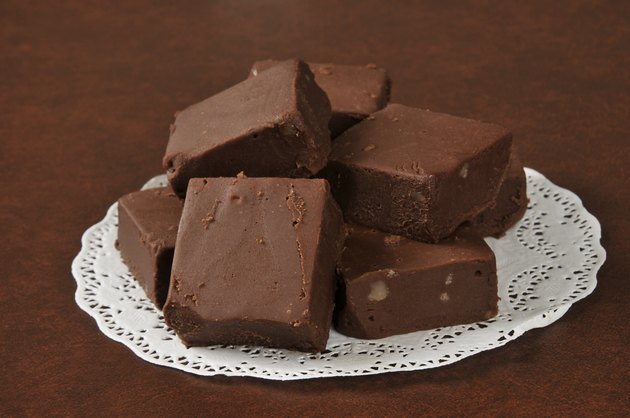
Manufacturers add glycerin to foods, including baked goods, fudge, candy and nutrition and energy bars, to help maintain their water content. It can also help keep ice crystals from forming in reduced-fat frozen desserts. Other foods that may contain glycerin include dairy products, soups, sauces, condiments, processed meats and seafood and water-based flavored drinks.
Adds Sweetness
Vegetable glycerin is sometimes used as an alternative sweetener in foods for diabetics and a number of low-carbohydrate processed foods. It's actually less sweet than sugar and has more calories, but because it falls into the same group of carbohydrates as sugar alcohols, it doesn't affect blood sugar levels or affects them less than sugar, according to licensed dietitian/nutritionist Monica Reinagel. Glycerin is well absorbed by the body and then converts to glucose, however, so it may have an effect on blood sugar more similar to sugar than to sugar alcohols.
Relieves Constipation
Large amounts of glycerine can cause a laxative effect, so it's sometimes used as a medicine to help relieve constipation, usually in the form of a suppository. It isn't recommended for this use if you're diabetic or have kidney problems, however, because it could make these conditions worse.
May Limit Dehydration
A study published in the Journal of Athletic Training in 2004 found that drinking a beverage containing glycerin before the race along with water during the race appeared to help limit dehydration and heat strain in mountain bikers. This was a very small study, however, with a total of just 12 participants, so further research is necessary to verify these results.
Vegetable glycerin, also called glycerol, is sometimes used as a food additive in baked goods, candy, fudge, dairy products, meat, pasta, cereals, processed fruits and vegetables, condiments, soups, sauces, egg products and fish products. Sometimes it is used to help maintain moisture levels or mix oil- and water-based ingredients, but it can also be used as a sweetener. The U.S. Food and Drug Administration regards it as generally safe, though the additive can have some side effects in large amounts.
Laxative Effect
The small amount of vegetable glycerin used in food products isn't likely to cause side effects. It is classified as a sugar alcohol, though, and in turn can have a laxative effect when consumed in large amounts. Thus, it may cause diarrhea, excessive urination and dehydration if you eat a lot of it. Glycerin suppositories are used to relieve constipation because of this effect.
Other Side Effects
The more common, less serious side effects that can occur when you consume large amounts of vegetable glycerin include nausea, vomiting and headache. Lying down after taking medicinal amounts of vegetable glycerin can help limit the risk of headache and help relieve headaches that do occur, according to PubMed Health. When used as a medicine, glycerin must be prescribed by a doctor and used under medical supervision.
Rare Side Effects
Some less common side effects that warrant immediate medical attention include confusion and irregular heartbeat. These would be extremely unlikely to occur with the small amounts typically used in foods, as they aren't common even in medicinal doses.
Potential Allergic Reactions
Vegetable glycerin is made from either palm oil or coconut oil, so if you're allergic to either of these oils, you should avoid vegetable glycerin. Otherwise, it could cause an allergic reaction, with symptoms including difficulty breathing, swelling, rash, itching and anaphylaxis. Use animal-based forms of glycerin, which are made from beef tallow or other animal fats, or synthetic glycerin, which is made from corn syrup, sugar cane or a petroleum derivative called propylene, instead.
A sweet, slippery liquid, glycerin forms the backbone of fat and oil molecules. You can get food-grade glycerin, a byproduct of soap making, in bottles at drugstores, health-oriented grocery stores or the baking sections of supermarkets. Glycerin fills a useful role in cakes, cookies, icings candy and fudge by binding water in a form that makes its unavailable to molds, allowing baked goods to stay fresher longer. Glycerin has about 27 calories per teaspoon and is 60 percent as sweet as sugar.
Step 1
Add a few drops of glycerin to recipes for royal icing for cakes and cookies to prevent the icing from drying out and forming a crust. Mix the glycerin with powdered sugar, egg whites and lemon juice.
Step 2
Combine 1 to 2 tbsp. of glycerin with confectioner's sugar, light corn syrup, water and unflavored gelatin to make fondant, a confectioner's sugar frosting often used on wedding cakes. The glycerin keeps the fondant moist and malleable, master baker and teacher James Peterson notes in his text "Baking."
Step 3
Add glycerin along with corn syrup, water, butter and salt to sugar and cornstarch to make saltwater taffy. Stir the ingredients in a saucepan over medium heat. Stir the mixture until it begins to bubble and then let it cook without being disturbed until soft cracks appear, recommends the online site Science of Cooking. Add flavoring and food coloring and pour the mixture onto a shallow cookie sheet to cool.
Step 4
Make nutrition bars by combining cereal or granola and whey protein in a mixer bowl. Add butter and vegetable oil to the bowl, followed by glycerin and water. Roll out the mixture to 3/8 inch, cut into pieces and bake at 400 F for 10 minutes.
Vegetable glycerin is a colorless and odorless liquid. It’s produced from vegetable oils (plant oils, palm oils or coconut oils). It is widely used in cosmetic products, foods and as a replacement for alcohol in herbal and botanical tincture.
Vegetable Glycerin Uses For Skin
It is used for anti-ageing treatments.
It is used as replacement of alcohol in herbal tinctures.
It is used in acne treatments.
It is used in washing soaps and gels.
It helps in retaining skin moisture.
It shows positive effects on skin cancer.
You may also read about petroleum jelly and its benefits.
How Can Glycerin Be Used On Skin?
1) For Soft Skin:
Who does not dream of baby like soft skin? If your skin is dry and lifeless, then it is time you tried Glycerin. It is inexpensive, easy to use and works wonders on dry and parched skin. Massaging your skin with glycerin diligently every single day will help reveal hydrated, fair and glowing skin that you have always dreamt of
How to Use: Mix a tablespoon of glycerin with ten tablespoons of water. Apply this before going to bed at night. Wash off the next morning.
2) Anti-ageing treatment:
If your skin is riddled with fine lines and wrinkles, you are sure to benefit from using glycerin. This gooey liquid has been used since time immemorial in treating myriad of skin conditions, especially wrinkles and other signs of ageing.
How to Use: Break an egg white into a bowl and gently beat it using a spoon until it is light and frothy. To this add a teaspoon of honey and one teaspoon of glycerin. Mix well and apply it onto your face using your fingertips in upward circular strokes. Leave it on for about 20 minutes and wash off with warm water. The egg white helps remove the impurities and keeps the skin clean and soft.
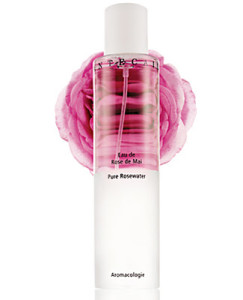
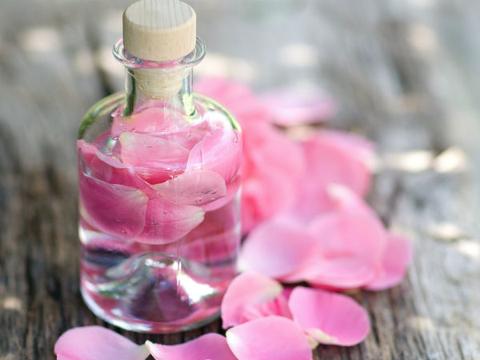
Rose Water 3) Toner:
While the market is loaded with toners for every budget, it is important that you choose a toner that suits your skin type. More often than not, you will end up spending a fortune on a product that does not suit your skin. So, if you are on the lookout for a toner that works and does not cost a bomb, you are in luck. Glycerin is skin friendly and suitable for all skin types. You can include glycerin as a part of your daily beauty regimen.
How to Use: Mix a teaspoon of glycerin with some rose water in a cup. The best proportion to follow is one-fourth cup of glycerin to 1 1/2 cups of rose water. Mix well and pour it into a spray bottle for easy use!
4) Moisturizer:
If you suffer from dry and scaly skin, this clear, odorless liquid is your new must-have product. Glycerin is worth all the praise it gets. It is a natural humectant and hence helps in retaining moisture and water in the skin. It is easy to apply and results begin to show at the very first application.
How to Use: Mix about 250 ml of glycerin with two tablespoon of fresh lime juice in a bowl. Mix the ingredients using a spoon and pour it into a clean and dry glass bottle. Lather this mixture onto your skin just like regular moisturizer. Though the mixture may be sticky, we suggest applying it at night before going to bed for better results. OR
If wearing glycerin to bed does not appeal to you, here is another quick way of reaping the benefits of glycerin without having to soil your pillow case. Take one tablespoon each of Vitamin E oil, Vaseline and glycerin. Mix the ingredients well and apply half-an-hour before you head into the shower. Within a few days, your skin will feel softer and moisturized. This works well on all skin types.
5) Cleanser:
Why experiment with dozens of cosmetics laden with chemicals? Go au naturel and try glycerin instead. When applied topically, glycerin gently removes dirt and dust from the skin and cleanses the skin from within.
How to Use:Throw in two tablespoons of vegetable derived glycerin and fruit fresh (citrus acid) into a bowl. If you are using this only on your skin, then you may add a single teaspoon of fruit fresh. Mix the two ingredients well. You should get a milky solution. So, keep adding more fruit fresh until the solution turns milky. Apply this on your face, arms and neck and wash off once it dries up. You can also leave it on overnight and wash off with lukewarm water the next morning.
OR
Mix 3 teaspoons of milk with 1 teaspoon of gly’in. Apply it on your face and leave it overnight. You can use this paste on your hands and feet too. Wash off the next morning as usual. Note: Make sure this mixture doesn’t get into your eyes.
6) Acne treatment:
Include glycerin into your beauty routine and bid sayonara to acne and say hello to supple, radiant skin. Not only will glycerin cleanse the skin and combat acne, but it will also lock in moisture to curb dryness naturally.
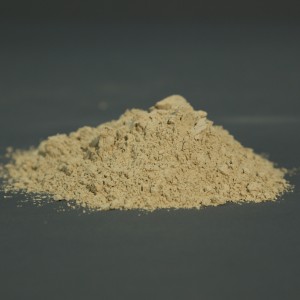
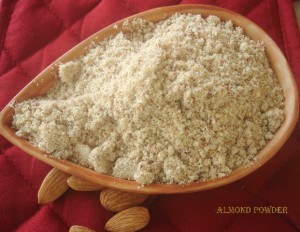
How to Use: Take one tablespoon of gly’in, 1/2 tablespoon of Borax powder and camphor in a bowl. Add a glass of distilled water to these ingredients and mix well using a spoon such that no lumps are formed. Apply on face and wash it off with lukewarm water once it has dried. You may wash your face again with cold water to remove stickiness and to close the pores on your skin. Fullers Earth Almond Powder 7) Blackhead treatment:
Anyone afflicted with blackheads will agree that they are no less than a nightmare. Even the most expensive products sometimes fail in getting rid of blackheads. But, now you have a remedy that really works. Yes, glycerin works well in treating blackheads. Add a few skin friendly ingredients to glycerin and voila you have a homemade blackhead removal remedy ready!
How to Use:
For natural blackhead treatment, take fullers earth, almond powder and a few drops of gly’rin. Mix one tablespoon of fullers earth, two teaspoon of glycerin and four tablespoon of almond powder in a bowl to make a paste. Apply it on areas affected with blackheads. Rinse it off with cold water once it dries.
8) Reduces Blemishes:
Religious use of this well-known tear stimulator, can help reduce blemishes and redness on the face. It can also soothe itchy and flaky skin. Glycerin helps maintain thudration and pH levels in the skin and thereby nourishes and reveals younger, brighter and radiant skin in no time at all.
How to Use: Simply apply a generous amount of glycerin to your skin or mix it with some Vaseline or milk and apply. Leave it on until it dries and wipe clean with a moist wash cloth.
Glycerin is natural, it is soft on the skin and is loaded with anti-bacterial properties. Use it as a cleanser, toner or in any other form. And, you will be blessed with soft baby like skin that you will fall in love with.
9) Softens dry lips:
If you desire pink and soft lips, all you need is a few drops of glycerin. It is gentle on the skin and can be used every day to soften your lips. It moisturizes your lips, and alleviates symptoms such as flaking and bleeding.
How to Use: All you need to do is coat your lips with a layer of honey and glycerin. Let it stay and resist the urge to lap it up. Once it has dried, you can wipe it off with a clean wash cloth. Do this every day until your lips feel soft again.
10) Treats mouth ulcers:
Mouth ulcers and canker sores bothering you? Ditch the medicated ointments and go natural. Try glycerin if you suffer from painful and stubborn mouth ulcers and sores. It is better, safer and yes, it works!
How to Use: Make a paste of glycerin and a pinch of turmeric. Now, apply this paste on the ulcers using a clean ear bud. Leave it on for 20 minutes and wash off. Do this every alternate day for a quick relief from ulcers.
11) Exfoliates dry skin:
Glycerin can do more than just moisturizing your skin. It can also exfoliate dead cells and reveal younger and brighter looking skin. It exfoliates dead cells from not just your skin but also lips.
How to Use: Mix equal parts of sugar and glycerin in a cup. Add a few drops of aloe to this to make a body scrub that exfoliates and moisturizes your skin. Lather the formula in your skin and massage a few minutes before you wash off.
12) Treats minor burns:
Whether your burn is caused by heat, radiation, or electricity, it is important that you use a natural remedy to treat it. Using medicated ointments will certainly help but will leave you skin dry and parched. Glycerin can be safely used to treat burns. It is mild on the skin and helps alleviate other symptoms such as itching and burning that accompanies burns.
How to Use: Use a few drops of glycerin directly on the skin. Leave it on for 20 minutes, wash off and repeat as many times as you can in a day.
13) Helps treat razor burns:
Have you suffered from nicks and cuts while shaving? You aren’t alone. Several hundred men and women suffer from razor burns. This happens when your skin is very sensitive and the hair is too thick and coarse. But, now you can use glycerin to not only soothe nicks, cuts and burns but also moisturize your skin after a shave.
How to Use: Make a homemade lotion using one tablespoon of dried calendula flowers and half a cup of witch hazel extract. You may add comfrey leaves to this and let the mixture stay for about 2 weeks. Now add 4 drops of sandalwood and lavender essential oil each, quarter cup rose water, and a quarter cup of vegetable glycerin to half a cup of the solution prepared. Use this instead of your after-shave lotion to soothe razor burns.
14) Diaper Rashes:
Diaper rashes can leave your baby in excruciating pain and discomfort. Bring back that million dollar smile on your lil’ one’s face, by using glycerin to treat the rashes quickly and effectively.
How to Use: You can make a homemade remedy using one tablespoon of beewax, half a cup of shea butter, quarter cup of coconut oil, and two large tablespoons of vegetable glycerin. Add the shea butter, coconut oil as well as the beewax into a saucepan and heat till it melts. Once the ingredients have melted, add the glycerin to it and beat the ingredients in a blender till it becomes creamy. Store in a jar and use till your baby gets relief from the rashes.
As sweet as nectar is not all that glycerin is about, it also has some profound health and beauty benefits to offer. You will be surprised to know that this natural humectant is also used to treat minor health woes like constipation to more serious ailments such as cerebral edema. Thanks to its therapeutic properties, glycerin is used in treating a myriad of skin conditions. It is in fact one of the most common ingredients found in most beauty products on the market today. before we go into glycerin uses for skin, let us first go through the composition of this miracle skin serum.
Glycerin, a sugar-alcohol compound, (the pure chemical product is called Glycerol, while the impure commercial product is called Glycerin) is an organic compound composed of carbon, oxygen and hydrogen. It’s a thick (viscous), colorless and odorless liquid. It is soluble in water, sweet to taste and is non-toxic too. It is used extensively in the making of soaps, anti-ageing gels, and even moisturizers. It is also is widely used as ingredients in drugs and pharmaceuticals, food sweetening and in the paper and printing industry to make printing ink.
It is 100% natural and nourishes your skin from within. With glycerin, you can bid adieu to side effects such as rashes and breakouts and welcome a soft and supple skin!
And, now it is time for the many uses of glycerin.
19 Glycerin Uses For Skin and How To Use It?
It can be used as a cleanser.
It can be used as a toner.
It is a wonderful skin moisturizer.
Applying the diluted version makes hands smooth.
It helps retain moisture in the skin and thus nourishes dry skin.
It plays an important role in cell maturation.
It cures oily skin problems like pimples, acne and blackhead.
It is 100% natural and gentle on the skin and thus can be used on infants and kids.
Glycerin is non-toxic in nature, and can be used to treat chapped lips.
It can be used to treat mouth ulcers.
Wash your feet well and apply glycerine on your cracked heels. It works like magic in healing your cracked heels overnight.
It can also be used as a sunscreen to some extent.
It removes clogged impurities and helps in lightening skin shade.
Glycerin also gives the skin a soft and supple feel.
Apply a coat of glycerine on your nails after removing nail paint. It prevents them from looking dried up.
Apply raw glycerine directly on scars that are especially caused burns, acne or wounds to get rid of them. Also read : Remedies To Get Rid Of Body Acne
People with dry skin can apply raw or diluted glycerine on skin. It is way better than those costly creams and parlour treatments.
It can be used for skin lightening.
It helps reduce wrinkles thus makes the skin look younger.
While any form of glycerin will work the same magic on your skin, our votes go out to vegetable glycerin. So, what is vegetable glycerin? And, how can it be used to better your complexion and skin health?
Glycerin is a sugar alcohol compound that is a clear liquid without any odour. It is non-toxic and has a sweet taste. It has several benefits for the skin. So, keep reading to find out the different skin benefits of glycerin. It has a gel-like texture, which makes it versatile to be used on all skin types. It helps the skin retain its moisture, which is why a lot of skincare products have this as an ingredient. You must have seen many soaps and lotions that have glycerin in them. That is why, we will tell you about the amazing benefits of using glycerin for your skin. Instead of using all the products containing glycerin why not use it in its natural form, right? So, here are all the ways you can use glycerin for your skin care!
1. Cleanser: For this, you will need some glycerin and some citric acid, so you can use either lemon juice or orange juice. Mix it together till it gets to a kind of white, milky texture.
2. Moisturiser: Glycerin works as an amazing moisturiser. Apply it directly on your skin every night, as a night moisturiser, to wake up to hydrated, soft and supple skin.
3. Toner: Mix equal parts of glycerin with rose water in a spray bottle to make the most amazing hydrating toner. Spray this at any time during the day to feel refreshed or when your skin starts to feel dry.
4. Primer: Glycerin can hydrate the skin without leaving any greasy film behind. This is why it can make a perfect base for your makeup. This is one of the best benefits of using glycerin for skin care.
5. Nail Cream: Do you have brittle nails with cuticles that keep showing up because of how dry they are? Then, just use glycerin on your nails to push back the cuticles to where they belong and to make your nails shiny.
6. For Anti-ageing: Mix vitamin E oil from the vitamin E capsules with glycerin to make a perfect serum for dry, ageing skin. Dryness is one of the main reasons for early ageing signs to appear. Ageing skin stops producing as much moisture as younger skin.
7. To Control Oiliness: Mix glycerin with multani mitti to make a face pack that would help get rid of the excessive oil on the face without it being too drying on the face. This is the best way to use glycerin for skin care.
Glycerin, also known as glycerol, is an organic compound of carbon, hydrogen and oxygen with the chemical formula C3H8O3. It is produced industrially, usually as a by-product of soap manufacture, from oils and fats. It can be made from animal fat or, in the case of vegetable glycerin, vegetable oil. The source of the raw material does not affect the chemistry of the final product, but, since glycerin is widely used in foods and medications, this distinction is important for vegetarians. It is also used as a sweetener and as an ingredient in a number of cosmetic products.
Structure and Properties
The compound consists of a chain of three carbon atoms, to which are attached hydrogen atoms on one side and hydroxyl (OH) groups on the other. The three OH groups form hydrogen bonds between molecules, giving the compound a syrup-like viscosity and allowing it to dissolve easily in water. Chemically speaking, glycerin is an alcohol, but for food purposes, it is classed — in the USA — as a carbohydrate by the Federal Food and Drug Administration (FDA), because it provides calories and is not a fat or a protein.
Pure glycerol does not crystallize easily, but it can be chilled to form a solid that melts at about 64.4°F (18°C). It lowers the freezing point of water, however, by an amount that depends on the concentration. For example, a 66.7% solution freezes at -51°F (-46.1°C). For this reason, it can be used as non-toxic antifreeze and for storing sensitive liquids, such as enzymes, in laboratory freezers.
Manufacture
Glycerol forms the “backbone” of many lipids, or oils and fats, and there are various processes that can be used to extract it from these substances. Most glycerin is made as a by-product of the manufacture of soap. In this process, either animal fat or vegetable oil can be used. It is heated with a strong alkali, usually caustic soda (sodium hydroxide), which produces soap and a solution of glycerin in water. This solution is then purified by distillation.
Vegetable glycerin can also be made directly from vegetable oil — often coconut or palm oil — by heating it to a high temperature under pressure with water. The glycerin backbone splits off from the fatty acids, and is absorbed by the water, from which it is then isolated and distilled to obtain the pure product. Food-grade vegetable glycerin is 99.7% pure, with the remaining 0.3% being water.
The interest in biodiesel fuel has resulted in the production of large amounts of low quality, non-food grade vegetable glycerin as a by-product. Purifying the liquid is not considered economically viable and it cannot be casually disposed of as it contains toxic methanol, which is used in the manufacturing process. As of 2013, there is much research into finding a use for this substance — something that does not require high purity glycerin. One promising possibility is to use it as a precursor in the production of some useful plastics.
Main Uses
Glycerin is widely used in the food industry for two main reasons: it has a sweet taste, but has fewer calories than sugar; and it is hygroscopic, that is, it absorbs moisture from the air. It is therefore used both to sweeten foods and to keep them moist. The compound is metabolized more slowly than sucrose — the type of sugar most commonly found in candy and in processed foods — and therefore does not have such a dramatic effect on blood sugar levels. It also does not contribute to bacterial tooth decay. Foods marketed as being low in carbohydrates are often sweetened with glycerin.
Another major use is in the cosmetics industry. Due to its hygroscopic properties, it is used in many moisturizing skin products, as it seems to help relieve dry skin problems by drawing water up from the lower layers. It is also a component of glycerin soap, which is often used by people with sensitive skin. Lotions containing this compound are also popular.
Vegetable glycerin can be used as a substitute for ethanol — the chemical commonly called “alcohol” — in making botanical extracts, such as herbal essences. It acts as a solvent that dissolves the substances of interest from the raw plant material. The advantage of this is that people who do not want to be exposed to alcohol can still have access to the botanical products. The disadvantage is that the resulting products have a much shorter shelf life.
There are also medical uses for vegetable glycerin. It is a common ingredient in cough mixtures, due to its soothing properties. Other applications are as a topical remedy for a number of skin problems, including psoriasis, rashes, burns, bedsores and cuts; as a laxative, in the form of suppositories; and to treat gum disease, as it inactivates the associated bacterial colonies.